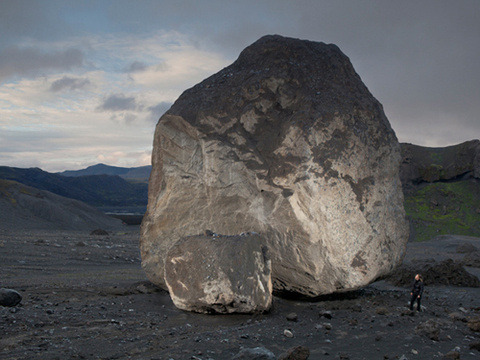
Despite standing more than 15 meters tall and weighing in at over 900 tons, this huge rock has stood in its current spot for a mere eight months. So how did it get there? After the Eyjafjallajökull volcano in Iceland erupted earlier in the year the heat generated was enough to melt surrounding glaciers, releasing the rocks and debris that now litter the valley. This gigantic rock is one of them.
With an adult body length of only 14 to 16 centimeters, and weighing as little as 120 grams, the endangered pygmy marmoset is one of the smallest primates discovered. They are normally found in the rainforest canopies of South America
An array of suckers found on the tentacles of a long-finned squid. Each sucker—about 400 micrometers wide, or a little smaller than the width of a human hair—is surrounded with “fangs” of chitin, a hard organic material. Squid use their powerful suckers to secure unwitting prey and feed their robust appetites—much like the horror-movie plant that inspired the image’s color scheme—little shop of horrors, of course.
Glowing nonstop in the Brazilian rain forest night, the new-found mushroom Mycena luxaeterna (pictured both in daylight, top, and in the dark) is something of a source of eternal light, as its Latin name—inspired by verses from Mozart’s “Requiem”—implies.
A type of gastric brooding frog, the likely extinct Rheobatrachus vitellinus had—or has—a unique mode of reproduction: Females swallowed their eggs, raised tadpoles in their stomachs, and then gave birth to froglets through their mouths (pictured above).
This site uses cookies to help personalise content, tailor your experience and to keep you logged in if you register.
By continuing to use this site, you are consenting to our use of cookies.