

Memorial Day 2026 - Linkages

#1

OneManGang

Senior Member
Joined
Sep 7, 2004
Messages
2,115
Likes
10,239
#1
Memorial Day 2026

A Linkage

As many of you know I am working this Summer as an Historical Interpreter at Alvin C. York State Historic Park in Pall Mall. The following is an adaptation of part of my narration for the tours of Alvin’s home. I invite one and all to come visit and learn more about Sgt. York and his people.
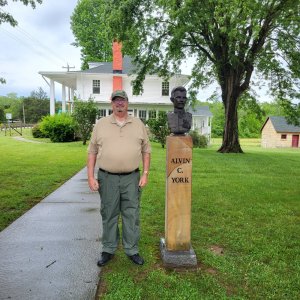
york monument.jpg

Your Fearless Scribe next to the monument to Alvin in front of Alvin's home in Pall Mall. (Author’s Collection)

This story starts on the morning of 2 October 1918 in the Meuse-Argonne sector. The Meuse-Argonne campaign ran from 26 September until the Armistice on 11 November 1918. It is easily the largest land battle in American history involving close to 1.5 million Doughboys in 23 Divisions with assorted artillery and other combat support units. Casualties were high: over 117,000 total casualties and of those over 26,000 were killed.

The Meuse-Argonne was a killing zone. The Germans had seized the area in 1914 and had spent the next four years erecting in the thick forests a network of barbed wire, deep trenches, pillboxes, and machine gun nests that covered every inch of ground. There was also pre-sighted artillery and many airfields close enough to offer air support.

On this particular morning the 77th Division went “Over The Top” aiming for objectives some 2 kilometers behind the German lines. As happened so often in the Great War, the attack stalled under a hail of German defensive fire. There was one exception. The 1st Battalion, 308th Infantry, supported by elements of the 2nd Battalion actually made it to their assigned objective. 1/308 was led by an attorney from New York named Major Charles Whittlesy, 2/308 was commanded by Capt. George McMurtry. They had swept up stragglers from other units and eventually some nine companies were represented.

They dug in on a hillside and waited on the rest of the Division to catch up. They never did. Runners were sent out to find regimental HQ but couldn’t get through. Patrol set out and prayed that whoever they ran into didn’t sprechen any Deutches. Everyone the ran into did.

They were cut off.

The agony of the 500-odd Americans cut off in “The Pocket” more popularly known as the Lost Battalion would go on for six more days. It is beyond the scope of this essay to go into the details of he heroic stand made by these men.

For a more detailed account of The Pocket go here: Tennessee vs The Maxims vs South Carolina

By the time The Pocket was relieved, less than 200 men remained and of those only 140 or so were fit for duty. Major Whittlesey and Captain McMurtry each earned the Medal of Honor for their actions and their leadership. Four other men from the pocket along with two airmen of the 50th Aero Squadron (who pinpointed the location of The Pocket and died in a crash-landing bringing it back) also earned the Medal.

As word of the cut off men went up the chain of command, it was inevitably picked up by members of the press who submitted stories to their papers at home. By now the “Lost Battalion” had become an issue on both sides of The Pond and the relief of The Pocket became a priority and no effort would be spared to make it happen.

Part of that effort fell to the 82nd “All American” Division to the right of the 77th. The nickname of the 82nd stemmed from the fact that it contained men from all 48 states. One of those men was a lanky corporal from Fentress County, Tennessee in G Company of the 328th Infantry named Alvin Cullum York. The division’s axis of advance would threaten the rear of the Germans surrounding The Pocket and distract the Germans while the 77th Division broke through and relieved Whittlesey and his survivors.

The 328th was assigned to take a railroad behind a landmark named “Hill 223” (height in meters) near the Village of Chatel Chechery. They jumped off on the morning of 8 October. Unfortunately the hill was studded with machine guns and trenches and the attack stalled. A detachment of seventeen men including Cpl. York from G Company under Sgt. Bernard Early was assigned to find a way through the German positions.

They came upon a group of German soldiers eating rations and captured them. They almost immediately came under fire from German rifles and machine guns on the ridge. Nine men were killed including York’s best friend Murray Savage. Sgt. Early was badly wounded.

Command devolved upon Cpl. York who led seven men to silence the German guns. York used his hunting skills to find a position from which he could pick off he machine gunners. He also captured a German officer whom he convinced at gunpoint to order the rest of the gunners to surrender. In all, counting the men captured earlier, York and his squad had captured 132 Germans and captured either 32 or 35 machine guns, depending on who is doing the counting. On of those guns is part of the collection at The Museum of Appalachia in Norris, TN.

The way was now clear for the 328th to take its objective.

Alvin and his squad escorted the Germans back and turned them over to regimental. Reports were filed and soon Alvin was nominated for the Medal of Honor which was approved.

A reporter heard of his exploits and interviewed Alvin shortly after the Armistice which ended the fighting on 11 November. The resulting article, The Fighting Elder, a reference to his position in the Church of Christ in Christian Union back in Pall Mall, was published in the Saturday Evening Post. The article was read all across the country and Alvin became a celebrity. Only thing was, he didn’t know as he was still in France.

When the 328th made it home in 1919 a contingent from New York City met the boat as it pulled into Hoboken, NJ, and essentially kidnapped Alvin. He was granted five days leave and hauled off to be wined and dined was subject of a massive parade down 5th Avenue.

Alvin turned down many lucrative offers of book deals, movie deals and product endorsements. He dismissed them all, saying bluntly, “This uniform isn’t for sale.” In another interview he said all he wanted to do was go home and go hunting with his coon dogs.

Eventually he made his way home to Pall Mall where he soon married Gracie Williams whom he’d been courting before he left for France. No less a figure than the Governor of Tennessee, Albert Roberts, presided at the wedding.

On 11 November 1921, Alvin was part of the Honor Guard for the Unknown Soldier along with Charles Whittlesey and George McMurtry, among other holders of the Medal of Honor. Alvin wound up sitting next Whittlesey and McMurtry for the interment ceremony at Arlington National Cemetery. McMurtry left an account of that day. He stated that Alvin was like a statue, completely silent. During the proceedings Whittlesey leaned over and said, “George, I should not have come here. I can’t escape the feeling that that could be one of my boys from The Pocket. I will have nightmares tonight, hearing the cries of the wounded.” Undoubtedly, Alvin was thinking the same thing, that the soldier in the tomb could have been one of his buddies from the 328th.

In 1942, his country needed help again and at the ripe age of 55 Alvin York went down to the Fentress County Draft Board and registered for the Draft. It was decided that he had done his bit.

Alvin was that kind of man.
 
Last edited:
#4
#4
Memorial Day 2026

A Linkage

As many of you know I am working this Summer as an Historical Interpreter at Alvin C. York State Historic Park in Pall Mall. The following is an adaptation of part of my narration for the tours of Alvin’s home. I invite one and all to come visit and learn more about Sgt. York and his people.

View attachment 833896

Your Fearless Scribe next to the monument to Alvin in front of Alvin's home in Pall Mall. (Author’s Collection)

This story starts on the morning of 2 October 1918 in the Meuse-Argonne sector. The Meuse-Argonne campaign ran from 26 September until the Armistice on 11 November 1918. It is easily the largest land battle in American history involving close to 1.5 million Doughboys in 23 Divisions with assorted artillery and other combat support units. Casualties were high: over 117,000 total casualties and of those over 26,000 were killed.

The Meuse-Argonne was a killing zone. The Germans had seized the area in 1914 and had spent the next four years erecting in the thick forests a network of barbed wire, deep trenches, pillboxes, and machine gun nests that covered every inch of ground. There was also pre-sighted artillery and many airfields close enough to offer air support.

On this particular morning the 77th Division went “Over The Top” aiming for objectives some 2 kilometers behind the German lines. As happened so often in the Great War, the attack stalled under a hail of German defensive fire. There was one exception. The 1st Battalion, 308th Infantry, supported by elements of the 2nd Battalion actually made it to their assigned objective. 1/308 was led by an attorney from New York named Major Charles Whittlesy, 2/308 was commanded by Capt. George McMurtry. They had swept up stragglers from other units and eventually some nine companies were represented.

They dug in on a hillside and waited on the rest of the Division to catch up. They never did. Runners were sent out to find regimental HQ but couldn’t get through. Patrol set out and prayed that whoever they ran into didn’t sprechen any Deutches. Everyone the ran into did.

They were cut off.

The agony of the 500-odd Americans cut off in “The Pocket” more popularly known as the Lost Battalion would go on for six more days. It is beyond the scope of this essay to go into the details of he heroic stand made by these men.

For a more detailed account of The Pocket go here: Tennessee vs The Maxims vs South Carolina

By the time The Pocket was relieved, less than 200 men remained and of those only 140 or so were fit for duty. Major Whittlesey and Captain McMurtry each earned the Medal of Honor for their actions and their leadership. Four other men from the pocket along with two airmen of the 50th Aero Squadron (who pinpointed the location of The Pocket and died in a crash-landing bringing it back) also earned the Medal.

As word of the cut off men went up the chain of command, it was inevitably picked up by members of the press who submitted stories to their papers at home. By now the “Lost Battalion” had become an issue on both sides of The Pond and the relief of The Pocket became a priority and no effort would be spared to make it happen.

Part of that effort fell to the 82nd “All American” Division to the right of the 77th. The nickname of the 82nd stemmed from the fact that it contained men from all 48 states. One of those men was a lanky corporal from Fentress County, Tennessee in G Company of the 328th Infantry named Alvin Cullum York. The division’s axis of advance would threaten the rear of the Germans surrounding The Pocket and distract the Germans while the 77th Division broke through and relieved Whittlesey and his survivors.

The 328th was assigned to take a railroad behind a landmark named “Hill 223” (height in meters) near the Village of Chatel Chechery. They jumped off on the morning of 8 October. Unfortunately the hill was studded with machine guns and trenches and the attack stalled. A detachment of seventeen men including Cpl. York from G Company under Sgt. Bernard Early was assigned to find a way through the German positions.

They came upon a group of German soldiers eating rations and captured them. They almost immediately came under fire from German rifles and machine guns on the ridge. Nine men were killed including York’s best friend Murray Savage. Sgt. Early was badly wounded.

Command devolved upon Cpl. York who led seven men to silence the German guns. York used his hunting skills to find a position from which he could pick off he machine gunners. He also captured a German officer whom he convinced at gunpoint to order the rest of the gunners to surrender. In all, counting the men captured earlier, York and his squad had captured 132 Germans and captured either 32 or 35 machine guns, depending on who is doing the counting. On of those guns is part of the collection at The Museum of Appalachia in Norris, TN.

The way was now clear for the 328th to take its objective.

Alvin and his squad escorted the Germans back and turned them over to regimental. Reports were filed and soon Alvin was nominated for the Medal of Honor which was approved.

A reporter heard of his exploits and interviewed Alvin shortly after the Armistice which ended the fighting on 11 November. The resulting article, The Fighting Elder, a reference to his position in the Church of Christ in Christian Union back in Pall Mall, was published in the Saturday Evening Post. The article was read all across the country and Alvin became a celebrity. Only thing was, he didn’t know as he was still in France.

When the 328th made it home in 1919 a contingent from New York City met the boat as it pulled into Hoboken, NJ, and essentially kidnapped Alvin. He was granted five days leave and hauled off to be wined and dined was subject of a massive parade down 5th Avenue.

Alvin turned down many lucrative offers of book deals, movie deals and product endorsements. He dismissed them all, saying bluntly, “This uniform isn’t for sale.” In another interview he said all he wanted to do was go home and go hunting with his coon dogs.

Eventually he made his way home to Pall Mall where he soon married Gracie Williams whom he’d been courting before he left for France. No less a figure than the Governor of Tennessee, Albert Roberts, presided at the wedding.

On 11 November 1921, Alvin was part of the Honor Guard for the Unknown Soldier along with Charles Whittlesey and George McMurtry, among other holders of the Medal of Honor. Alvin wound up sitting next Whittlesey and McMurtry for the interment ceremony at Arlington National Cemetery. McMurtry left an account of that day. He stated that Alvin was like a statue, completely silent. During the proceedings Whittlesey leaned over and said, “George, I should not have come here. I can’t escape the feeling that that could be one of my boys from The Pocket. I will have nightmares tonight, hearing the cries of the wounded.” Undoubtedly, Alvin was thinking the same thing, that the soldier in the tomb could have been one of his buddies from the 328th.

In 1942, his country needed help again and at the ripe age of 55 Alvin York went down to the Fentress County Draft Board and registered for the Draft. It was decided that he had done his bit.

Alvin was that kind of man.
Wish I could be there with you...
 
  • Like
Reactions: OneManGang

Advertisement


Back
Top